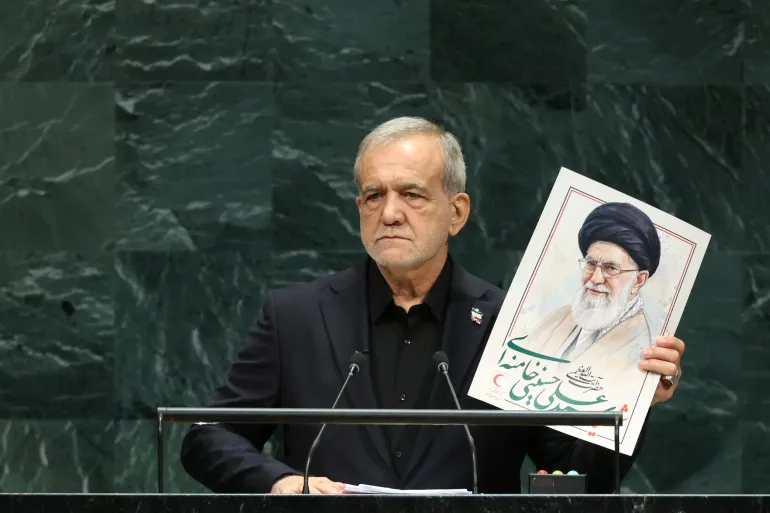
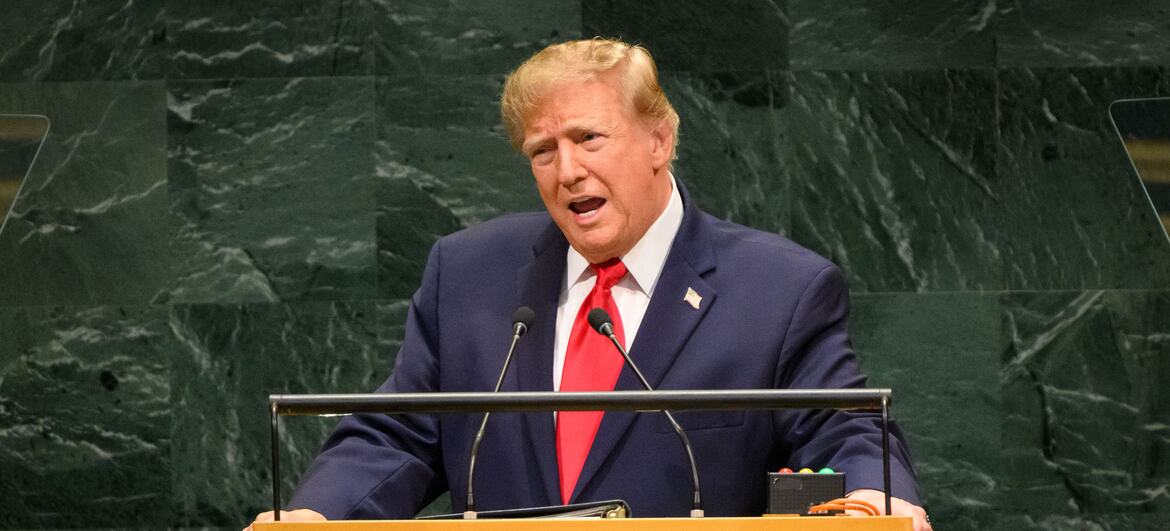
In his 37-minute speech, Trump focused heavily on Iran, arguing that U.S. military action had prevented Tehran from obtaining a nuclear weapon. He also warned that the United States could take further military action if an agreement to end the conflict cannot be reached.
Trump Warns Iran Over Nuclear Program
Trump described Iran as a major source of instability in the region and said his administration would not allow the country to obtain a nuclear weapon.
He said the United States had previously offered Tehran economic cooperation in exchange for changes to its nuclear program and its support for militant groups. According to Trump, Iran rejected those proposals.
He then pointed to Operation Midnight Hammer, saying U.S. forces had destroyed Iran's nuclear facilities. Trump also claimed subsequent military operations had weakened Iran's military capabilities, including its naval forces, air defenses and missile infrastructure.
The president presented diplomacy and further military escalation as competing possibilities, while also saying he expected an eventual agreement with Tehran.
Trump called on other countries to support economic pressure on Iran, including measures aimed at limiting the country's ability to finance military and regional activities.
Trump Says Several Conflicts Have Been Addressed
The president also highlighted his administration's approach to international conflicts.
Trump said his administration had helped resolve or reduce tensions in several disputes, including conflicts involving Cambodia and Thailand, Kosovo and Serbia, the Democratic Republic of Congo and Rwanda, Pakistan and India, and Armenia and Azerbaijan.
He also referred to the war in Gaza and the continuing conflict between Russia and Ukraine.
Regarding Ukraine, Trump called for an end to the fighting and said diplomatic efforts should continue toward a settlement.
Venezuela and the Western Hemisphere
Trump also focused on developments in the Americas.
He discussed U.S. military action involving Venezuela and referred to the arrest of Venezuelan President Nicolás Maduro, while saying Washington was working with Venezuelan leaders toward a different future for the country.
The president also discussed U.S. efforts against drug trafficking organizations and highlighted his administration's policies toward Mexico and Cuba.
On Cuba, Trump said his administration was seeking fundamental political change on the island and predicted that freedom would eventually come to the country. Reuters reported that his remarks contributed to heightened tensions with the Cuban government.
Trump also spoke about Greenland and Denmark, emphasizing the Arctic territory's strategic importance to U.S. and NATO security.
Trump Promotes ‘Superintelligence’
Artificial intelligence was another major theme of the president's address.
Trump argued that the term “artificial intelligence” understates the capabilities of the technology and said it should instead be described as “superintelligence.”
He presented technological leadership as an increasingly important element of economic and geopolitical competition and said the United States would continue supporting the development of advanced AI.
Trump's comments came as AI governance and safety were major subjects during the 2026 UN General Assembly. UN officials have separately called for international safeguards around AI while maintaining room for technological innovation.
Criticism of International Institutions
Trump also renewed his criticism of several international organizations.
He criticized the International Criminal Court, arguing that it should not exercise authority over the United States, and called on countries to reconsider their participation.
He also criticized the UN Human Rights Council, UNESCO and the International Maritime Organization, arguing that international institutions should focus on their core responsibilities rather than what he described as broader global-governance agendas.
A Speech Focused on U.S. Power
Trump's address presented military strength, economic pressure and technological leadership as central elements of his administration's foreign-policy approach.
At the same time, he said diplomacy remained possible in several international disputes, particularly regarding Iran and Ukraine.
The speech came during the 81st session of the UN General Assembly, whose general debate is being held at UN Headquarters in New York from September 22 through September 28, 2026.