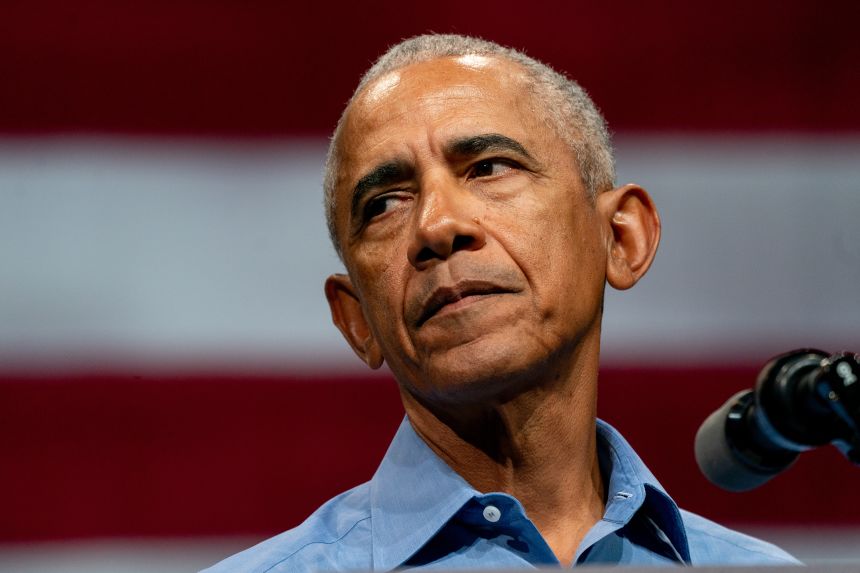
Former US President Barack Obama criticized President Donald Trump’s decision to bar CNN, MS NOW and Politico from the White House, saying the broader question of press freedom should transcend party politics.
Speaking Monday at an event at Salem State University in Massachusetts with historian Doris Kearns Goodwin, Obama said he was not surprised by Trump's decision but argued that restrictions on media organizations over critical coverage raise a fundamental issue for American democracy.
“You cannot do that and say that you are still living in a democracy,” Obama said, referring to the exclusion of news organizations because of their reporting.
He urged members of both political parties to view press access as an institutional issue rather than something that should depend on which party controls the White House.
“This should not be a partisan issue,” Obama said. “This should be something that rises above partisanship.”
Trump Announces Ban on Three Media Organizations
Trump announced on September 18 that CNN, MS NOW and Politico would be barred from the White House, accusing the organizations of repeatedly publishing what he characterized as “fake news.”
The president said the restrictions were not based on a single report but on what he described as the outlets’ broader pattern of coverage.
Reporters from the three organizations were subsequently denied access to the White House grounds, and the outlets said some journalists had their press credentials confiscated or disabled.
Trump has argued that White House access is a privilege and has defended the decision as a response to what he considers inaccurate or unfair reporting.
Obama Calls Press Freedom “Foundational”
Obama said government officials should not use their control over access to punish media organizations because they dislike criticism.
“The free press, the idea that the government cannot discriminate against, or pick on, or bully, or exclude somebody because they don’t like the criticism that’s being leveled at them, that is a foundational issue,” he said.
Obama also noted that during his presidency, he advocated for greater press freedom internationally in countries where journalists faced government restrictions.
At the same time, his own administration faced disputes over media access.
In one instance, White House aides briefly excluded Fox News from a group interview with a senior administration official. Obama also faced criticism from the White House Correspondents’ Association after the White House did not provide its usual photographic access to a presidential golf outing involving Tiger Woods.
White House Defends Its Actions
The Trump administration has cited previous restrictions or disputes involving the Obama and Biden administrations while defending its treatment of the three outlets.
A White House statement argued that changes to media access have occurred under previous Democratic administrations as well.
However, FactCheck.org reported that the current restrictions on CNN, Politico and MS NOW go beyond the examples cited by the administration, distinguishing the current White House ban from the earlier incidents.
Federal Judge Orders Access Restored
The dispute soon moved into federal court.
CNN, MS NOW and Politico challenged the restrictions, arguing that the government's actions violated their constitutional protections. On September 24, US District Judge Timothy Kelly temporarily ordered the administration to restore the journalists' White House credentials.
Reporters from the three organizations were subsequently allowed back into the White House complex.
The legal dispute remains part of a broader confrontation between the Trump administration and several major news organizations over presidential access, press coverage and the limits of executive control over White House media operations.
For Obama, however, the central question extends beyond the dispute between Trump and individual news organizations: whether access to government institutions can be restricted because journalists publish criticism of those in power.
His comments come as the courts and news organizations continue to contest the scope of the White House's authority over press access.